


Views: 3 Author: Site Editor Publish Time: 2026-05-29 Origin: Site


Between February and March of this year, we signed three consecutive orders with a long-standing Canadian customer for Jotun Muki Z 2008 coated cold drawn seamless steel pipes. This Canadian customer is a well-known local shipyard, specializing in the construction of various types of vessels and has strict quality requirements for marine steel pipes.
This order requires a batch of carbon steel cold drawn seamless steel pipes for use in key structural parts of the hull. Cold drawn seamless steel pipes are widely used in shipbuilding for structural frameworks, hydraulic systems, and piping systems due to their high dimensional accuracy, uniform wall thickness, and smooth surface.
Pipe Dimensions and Performance: The carbon steel cold drawn seamless pipes must meet standard requirements for dimensions and performance in the shipbuilding industry.
Abrasive Blasting: Must be blasted to Sa 2.5 standard to ensure coating adhesion.
Surface Coating: Must use Jotun Muki Z 2008 grey inorganic zinc shop primer, with a dry film thickness strictly controlled between 15-20 microns.
Export Transport Safety: Must be suitable for the marine environment and prevent coating damage during transit.
We use high-quality carbon steel in the cold drawn process to produce seamless pipes. This process ensures high dimensional accuracy, smooth inner and outer surfaces, and uniform wall thickness. After cold drawing, heat treatment ensures mechanical properties meet the strict requirements of shipbuilding.
All pipes are blasted before coating to ISO 8501-1 Sa 2.5 standard:
The surface shows a metallic (natural metal color), free from visible oil, grease, dirt, mill scale, and rust.
Jotun Muki Z 2008 is a two-component, inorganic silicate zinc shop primer specifically designed for steel plate pretreatment.
PSPC Approved: Meets IMO coating performance standards for ballast tanks and cargo oil tanks, suitable for direct use in shipbuilding projects.
High Temperature Resistance: Can withstand up to 400°C, suitable for welding and cutting operations.
Dry film thickness is controlled at 15-20 microns, ensuring a thin, uniform coating that does not affect subsequent welding efficiency and avoids cracking risks from excessive thickness.
For export shipping requirements, we provide comprehensive packaging protection:
End Protection: Plastic caps are added to both ends to protect the pipe ends and the paint coating.
Waterproof Packaging: Covered tightly with waterproof tarpaulin, with ventilation to prevent zinc salts (white rust).
Lifting Specifications: Nylon slings are used; steel wire ropes are strictly prohibited from direct contact with the coating.
Container Loading: According to customer requirements, we coordinate container loading at our factory to ensure a controlled shipping process.
This batch of coated cold drawn seamless pipes has been successfully delivered and received positive feedback from the customer.
Advantage | Description |
One-Stop Supply | Cold drawn seamless pipe supply + professional coating + export packaging, providing a one-stop product export service. |
Technical Expertise | Professional and stable supply channels for Jotun brand anti-corrosion coatings. |
Quality Control | Inspection reports for each batch including pipe dimensions, film thickness measurement, and visual inspection. |
Export Experience | Familiar with export procedures, self-application for export licenses, meeting export packaging requirements. |

Cold drawn seamless pipe is manufactured at room temperature by forcefully pulling hot-rolled steel pipe (as the "raw material") through a die with progressively smaller diameters. This process results in smaller dimensional tolerances, good surface brightness, and higher strength.
Round billet → Heating → Piercing → Heading → Annealing → Pickling → Lubrication → Cold Drawing → Heat Treatment → Straightening → Finishing → Inspection → Warehousing
Core Process: Utilizing the principle of work hardening, the steel pipe is forced through a tapered die smaller than its diameter, refining the internal grain structure and achieving strengthening.
Key Steps: The entire production is like a rigorous assembly line, involving multiple steps: pickling (removing scale), lubrication (reducing friction), cold drawing (shaping and strengthening), heat treatment (relieving internal stress), straightening, and inspection.
Raw Material Preparation:
Pickling: Removes surface scale and rust.
Phosphating/Saponification: Forms a dense metallic soap film on the surface to reduce friction and improve lubricity.
Lubrication: Applies lubricant to reduce die wear.
Cold Drawing Process
Core equipment includes chain or hydraulic draw benches (tonnage 30kN - 7000kN). There are three drawing methods:
Sinking: Reduces outer diameter only.
Rod Drawing: Changes both outer diameter and wall thickness.
Sinking with Mandrel: Uses a mandrel to control inner diameter precision.
Post-Processing:
Annealing/Normalizing: Eliminates work hardening and residual stress, restores ductility.
Straightening: Corrects bending.
Finishing: Cutting ends, dimensional inspection, non-destructive testing (eddy current, ultrasonic), hydrostatic testing, etc.
Item | Typical Value / Range | Remarks |
Standard | GB/T 3639-2021 (most common domestic) | Others: GB/T 8162 (structural), GB/T 8713 (hydraulic) |
Common Sizes | OD: 16-219 mm / WT: 2.5-40 mm | Advanced processes can achieve OD 4-200 mm |
Dimensional Tolerance | OD: ±0.08 to ±0.80 mm / WT: ±10% (min. ±0.10 mm) | For special requirements, ID tolerance can reach H8-H10 level |
Surface Quality | Roughness Ra ≤ 0.4 μm (mirror-like) / Straightness ≤ 0.3 mm/m | Wall thickness uniformity far superior to ordinary hot-rolled pipes |
Mechanical Properties | Yield Strength: ≥ 325 MPa (for ≤45mm size) | 20%-30% higher strength than same material hot-rolled pipe |
Common Materials | Carbon steel: 10#, 20#, 45# / Alloy steel: Q345 (16Mn), 40Cr, 42CrMo | Meets different strength and toughness requirements |
Presence of residual stress.
Small reduction per pass, requiring multiple passes with intermediate annealing.
Not suitable for mass production of high-hardness, difficult-to-deform alloys.
Longer production cycle, relatively lower efficiency.
Heat treatment effectively overcomes the disadvantages of cold drawn pipes. By controlling heating, holding, and cooling processes, the pipe's performance can be adjusted to meet engineering design requirements.
Solutions for three core disadvantages (residual stress, reduced ductility, uneven structure):
Core Issue Addressed | Main Process | Working Principle | Process Parameters (Reference) | Effects & Characteristics |
Eliminating Residual Stress | Stress Relieving Annealing | Heating below recrystallization temperature (typically 500-650°C) releases 80%-95% of internal residual stress while retaining most of the strength gain from cold drawing. | Temp: 500-650°C / Time: ~1.5-2 min/mm wall thickness / Cooling: Air cool after removal | Greatly improved dimensional stability, less deformation during machining; good toughness recovery with minimal strength loss. |
Restoring Ductility & Toughness | Recrystallization Annealing | Heating to a higher temperature (above recrystallization point) allows elongated grains to recrystallize and grow into new, uniform equiaxed grains, fully restoring or even improving ductility and toughness. | Temp varies by steel type: (e.g., carbon steel ~680-720°C, alloy steel 27SiMn 870-900°C) / Cooling: Air cool | Strength decreases, but elongation increases significantly (over 30%), pipe becomes more ductile, suitable for subsequent cold forming like bending and flaring. |
Improving Pipe Performance | Quenching + High Temperature Tempering | Quenching (heating above Ac3, rapid cooling) creates a very hard structure, followed by high-temperature tempering (heating to 500-650°C) to decompose and adjust the structure. | Quenching: 850-880°C / High-temp Tempering: 550-650°C / Cooling: Water or oil quench | Enhances overall mechanical properties, achieving a good balance of strength and toughness (e.g., improves yield/tensile strength and impact resistance). |
Besides shipbuilding, cold drawn seamless pipes are widely used in various industries:
Aerospace: Hydraulic system lines in aircraft, rocket propulsion devices, satellite support structures.
Automotive: Engine components, suspension systems, brake systems, shock absorbers, fuel lines.
Hydraulics & Machinery: Hydraulic cylinder tubes, pneumatic cylinders, bearing sleeves, machined parts.
Petrochemical: Oil well pipes, drill pipes, transmission pipelines.
Energy & Power: Heat exchanger tubes for nuclear power, boiler tubes, power generation facilities.
Others: Construction structures, refrigeration equipment (condensers, evaporators), military.
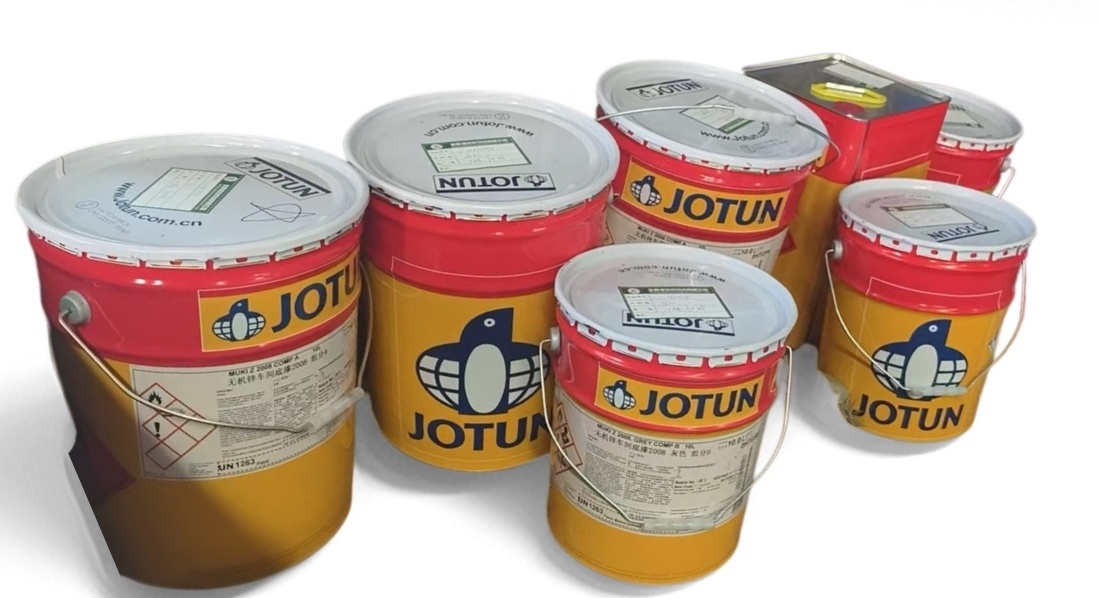
This is the Jotun industrial coating product specified in the Canadian customer's project.
Product Property | Parameter |
Product Type | Two-component, inorganic, medium moisture cure silicate zinc coating |
Color | Grey, Green |
Volume Solids | 28% ± 2% |
Mixing Ratio | Base:Curing Agent = 1:1 (by volume) |
Thinner | Jotun Thinner No. 4 (fast drying) / No. 25 (slow drying) |
Packaging | 20L unit |
Designed for efficient welding: Effectively reduces welding porosity and reduces burn-off on the back of the substrate during welding or cutting.
Fast drying & abrasion resistant: Surface dry in 1-3 minutes, hard dry in 3-5 minutes at 23°C; allows quick stacking after application.
Excellent corrosion protection: Uses Type II zinc powder meeting ASTM D520 standard, providing cathodic protection.
Full certifications: Holds PSPC, DNV, LR, and other classification society approvals.
Wide application range: Suitable for ships, marine engineering, bridges, power stations, mining equipment, etc.
Substrate Temp | Surface Dry | Hard Dry | Full Cure |
23°C | 1-3 minutes | 3-5 minutes | 11 days |
40°C | 1-2 minutes | 1-2 minutes | 1 day |
Automatic spraying on steel plate pretreatment lines.
Shop primer for shipbuilding.
Temporary protection for steel structures.
Steel structures and pipes in high-corrosion environments and immersed conditions.
