


Views: 38 Author: Site Editor Publish Time: 2026-08-03 Origin: Site


In pressure piping systems for petrochemical, marine, and pharmaceutical applications, ASTM A403 serves as a key specification for wrought austenitic stainless steel butt-welding fittings, covering grades such as WP304, WP316, and WP321. WP316/316L, with molybdenum addition, offers enhanced resistance to chloride-induced pitting and crevice corrosion, making it a preferred choice for moderately to highly corrosive service conditions.
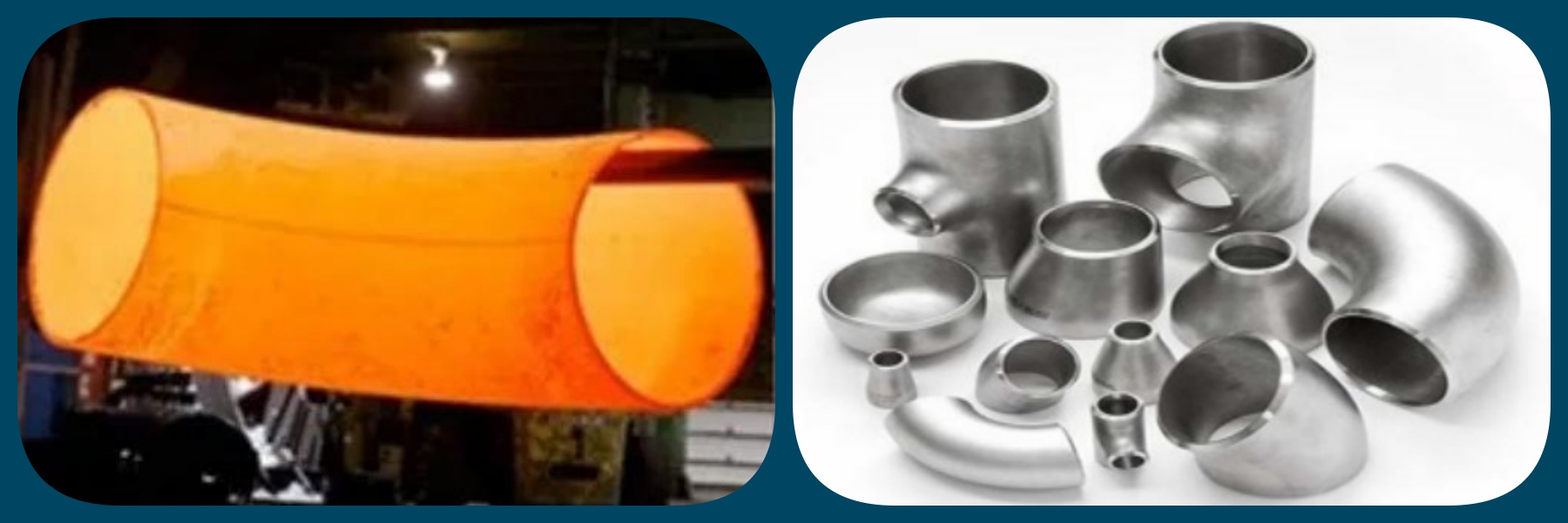
System integrity relies on proper material matching across components:
Component Type | Applicable ASTM Standard | Representative Grade |
Butt-weld Fittings | ASTM A403 | WP316/316L |
Seamless/Welded Pipe | ASTM A312 | TP316/316L |
Forged Fittings & Flanges | ASTM A182 | F316/316L |
Plate/Sheet | ASTM A240 | 316/316L |
Castings | ASTM A351/A743/A744 | CF8M etc. |
Piping design should ensure material compatibility—for instance, A312 TP316L pipe is best paired with A403 WP316L fittings to maintain uniform corrosion resistance and meet code requirements.
Equivalent designations for SS316/316L across major standards:
Standard | 316 | 316L |
UNS | S31600 | S31603 |
GB (China) | 0Cr17Ni12Mo2 | 00Cr17Ni14Mo2 |
EN (Europe) | 1.4401 / X5CrNiMo17-12-2 | 1.4404 / X2CrNiMo17-12-2 |
JIS (Japan) | SUS316 | SUS316L |
ISO | 20 | 19 |
UNS numbers or full standard designations are recommended for procurement clarity, as 316L differs from 316 in numerical codes and material markings.
The primary distinction lies in carbon content: 316L is a low-carbon variant (≤0.03% C) versus 316 (≤0.08% C). This leads to practical differences:
| CHEMICAL | LIMITS | C | Mn | P | S | Si | Ni | Cr | Mo |
| ASTM A403 WP316 | MIN | 10.00 | 16.00 | 2.00 | |||||
| MAX | 0.08 | 2.00 | 0.045 | 0.030 | 1.00 | 14.00 | 18.00 | 3.00 | |
| ASTM A403 WP316L | MIN | 10.00 | 16.00 | 2.00 | |||||
| MAX | 0.03 | 2.00 | 0.045 | 0.030 | 1.00 | 14.00 | 18.00 | 3.00 |
Intergranular Corrosion Resistance: The lower carbon in 316L reduces chromium carbide precipitation at grain boundaries during welding, minimizing sensitization risk—post-weld annealing is typically not required. For 316, post-weld annealing is generally recommended for optimal corrosion performance.
Mechanical Strength: 316 exhibits slightly higher yield strength (≈205–210 MPa) compared to 316L (≈170–180 MPa), along with moderate tensile strength differences, which remain acceptable for most engineering designs.
| MATERIAL | ASTM A403 WP316 | ASTM A403 WP316L |
| T.S (MPA) | 515 min | 485 min |
| Y.S (MPA) | 205 min | 170 min |
| EL % | 28 min | 28 min |
Thermal Performance: 316L shows better resistance to carbide precipitation in the 800–1575°F range.
Both grades benefit from 2–3% molybdenum content, delivering markedly superior corrosion resistance over 304 stainless in sulfuric acid, chlorides, organic acids, and similar media. They are widely used in marine environments, chemical processing, pharmaceutical equipment, heat exchangers, and pulp & paper mills.
For welded constructions, 316L is often a practical choice, helping streamline post-weld treatment while maintaining weld zone corrosion integrity.
Where elevated temperatures or higher stress are factors, and annealing is feasible, 316 may be considered for its modest strength advantage.
Dual-certified (WP316/316L) fittings meet both grade requirements, offering added flexibility in project specifications.
