


Views: 8 Author: Site Editor Publish Time: 2026-06-16 Origin: Site


In industrial steel piping systems, elbows are essential components for changing pipe direction. ASME B16.9 stainless steel elbows are widely used in oil, chemical, food, and pharmaceutical industries due to their standardized design and excellent corrosion resistance. This article provides a detailed overview of this critical pipe fitting.
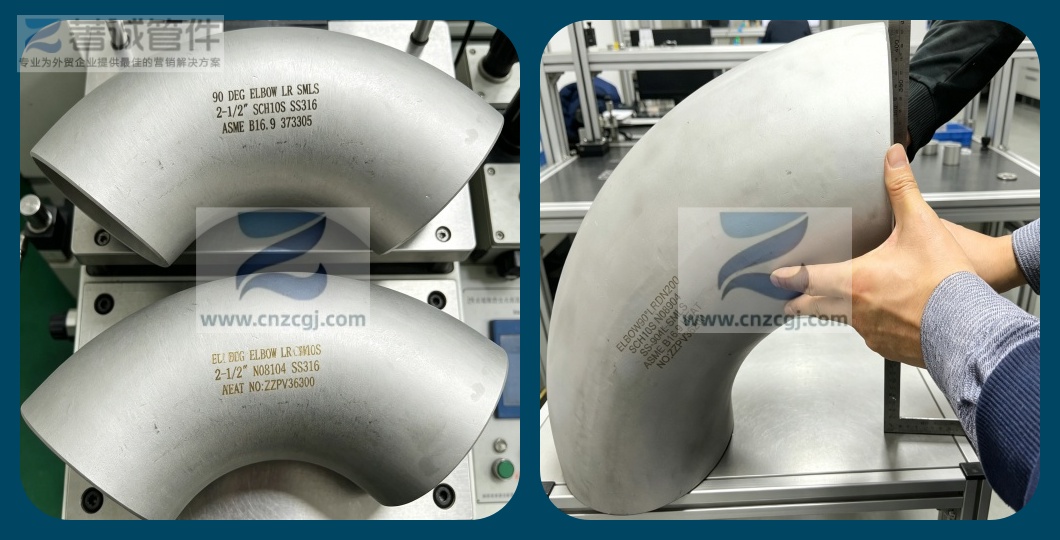
Stainless steel elbow is a pipe fitting made from stainless steel through processes such as pushing, welding, or forging. It is used to change the direction of flow in industrial pipelines. Common angles are 45deg, 90deg, and 180deg elbows.
Owing to its exceptional resistance to corrosion, capacity to withstand elevated temperatures, and smooth surface finish, this fitting is well suited for service conditions that demand high fluid purity or protection against aggressive chemical media—typical applications include the petrochemical, food processing, pharmaceutical, and water treatment industries.
ASME B16.9 is a standard issued by the American Society of Mechanical Engineers for "factory-made wrought butt-welding fittings." It covers dimensions, tolerances, and wall thickness for steel butt-welding fittings such as elbows, tees, reducers, caps, and lap-joint stub ends. Elbows made to this standard offer high dimensional accuracy, good interchangeability, and reliable quality—recognized globally as a mark of assurance.
Under ASME B16.9, stainless steel elbows are connected by butt welding. Therefore, they are commonly referred to as stainless steel butt-welding elbows.
They can be classified by bending angle, bending radius, and manufacturing process:
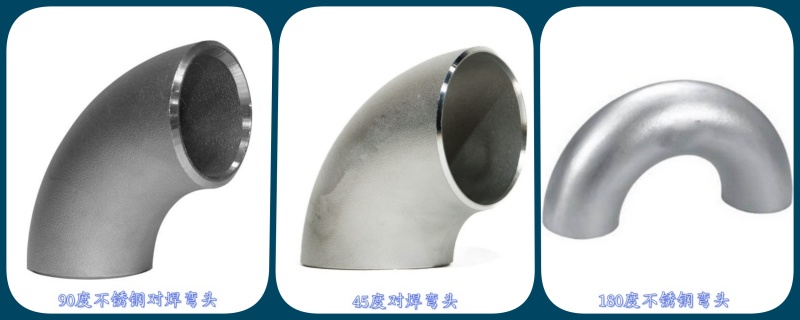
45 Deg Stainless Steel Elbow: provides a gradual change in direction with low pressure loss;
90 Deg Stainless Steel Elbow: the most common type, used for right-angle turns;
180 Deg Stainless Steel Elbow: used for U-shaped return sections.

Long radius (LR): radius equals 1.5 times the nominal diameter (1.5D). This is the most widely used type. LR elbows are available in 45°, 90°, and 180°.
Short radius (SR):radius equals the nominal diameter (1.0D). Used where space is limited. SR elbows are only available in 90° and 180°; ASME B16.9 does not include 45° short-radius elbows.
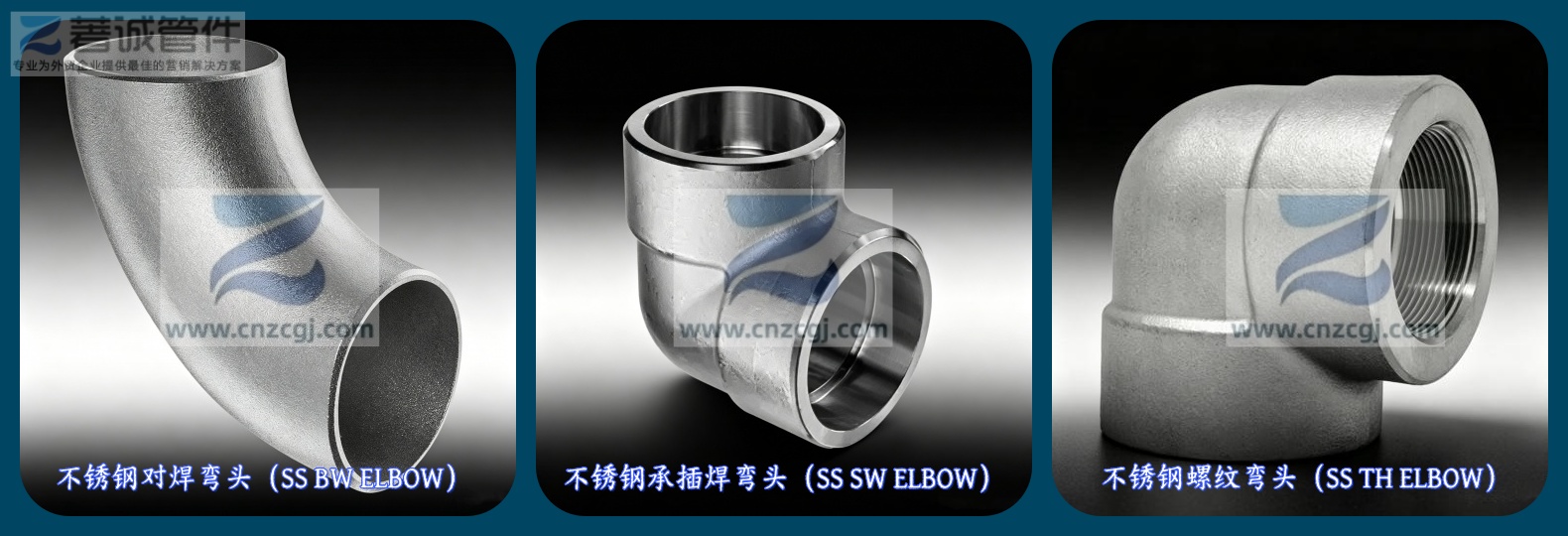
Butt-Welding Elbow: has beveled ends for welding to pipes. Sizes range from 1/2" to 48". High strength, suitable for high-pressure systems.
Socket-Welding Elbow: pipe inserts into the socket and is then welded. Used for Class 3000, 6000, and 9000 systems, sizes 1/8" to 4", for small-bore high-pressure lines.
Threaded Elbow: connects via threads. Used for Class 2000, 3000, and 6000 small-bore pipelines.
Socket-weld and threaded elbows are made by forging and follow ASME B16.11.
Excellent corrosion resistance: withstands acids, salts, and many chemicals, ensuring long service life.
High strength and temperature resistance: operates reliably from -196°C to 800°C, suitable for cryogenic or high-temperature conditions.
Hygienic surface: smooth finish resists fouling, meeting food and pharmaceutical standards.
Reliable sealing: butt-welded joints have much lower leakage risk than threaded or flange connections.
High standardization: ASME B16.9 ensures precise dimensions and full compatibility with matching pipes and fittings.
Different applications require different grades. Below are the most common ones:
Grade | Features | Typical Applications |
SS304/304L | General-purpose austenitic, good corrosion resistance, cost-effective | Water treatment, general chemical, food, construction |
SS316/316L | Contains molybdenum, better resistance to chlorides and acids | Marine, pharmaceutical, paper making, fine chemicals |
SS321 | Contains titanium, resists intergranular corrosion, high-temperature use | Boilers, heat exchangers, high-temperature piping |
SS310S | Excellent oxidation resistance up to 1100°C | Furnaces, heat treatment equipment |
Duplex (2205 etc.) | High strength, excellent stress corrosion resistance | Sub sea, oil & gas, high-chloride environments |
Note: "L" stands for low carbon, reducing inter granular corrosion after welding. "H" stands for high carbon, suitable for high-temperature strength.
Austenitic stainless steel has an austenitic structure at room temperature. It is the largest and most widely used stainless steel family, accounting for over 80% of total production. It typically contains about 18% chromium and 8–25% nickel, with around 0.1% carbon. The corresponding U.S. material standard is ASTM A403/A403M.
ASTM A403/A403M is the internationally recognized standard for wrought austenitic stainless steel butt-welding fittings. It strictly defines material composition, manufacturing processes, mechanical properties, and inspection requirements to ensure reliable performance in high-pressure and corrosive conditions.
Chemical Composition (ASTM A403)
Grade | C (max) | Mn (max) | P (max) | S (max) | Si (max) | Ni | Cr | Mo |
WP304 | 0.08 | 2.00 | 0.045 | 0.030 | 1.00 | 8.0–11.0 | 18.0–20.0 | – |
WP304L | 0.03 | 2.00 | 0.045 | 0.030 | 1.00 | 8.0–11.0 | 18.0–20.0 | – |
WP316 | 0.08 | 2.00 | 0.045 | 0.030 | 1.00 | 10.0–14.0 | 16.0–18.0 | 2.0–3.0 |
WP316L | 0.03 | 2.00 | 0.045 | 0.030 | 1.00 | 10.0–14.0 | 16.0–18.0 | 2.0–3.0 |
Mechanical Properties (ASTM A403)
Material | Tensile Strength (MPa, min) | Yield Strength (MPa, min) | Elongation (% , min) |
WP304 | 515 | 205 | 28 |
WP304L | 485 | 170 | 28 |
WP316 | 515 | 205 | 28 |
WP316L | 485 | 170 | 28 |
Duplex stainless steel contains roughly equal amounts of ferrite and austenite (about 50% each). Its U.S. material standard is ASTM A815/A815M.
ASTM A815/A815M covers wrought ferritic, ferritic/austenitic (duplex), and martensitic stainless steel butt-welding fittings. These include seamless and welded fittings, divided into WP grade (high-pressure) and CR grade (low-pressure). WP fittings follow ASTM A960 high-pressure requirements; CR fittings follow MSS SP-43 for thin-wall, low-pressure applications.
Chemical Composition (ASTM A815)
| CHEMICAL | C | Mn | P | S | Si | Ni | Cr | Mo | N | Cu | W |
| ASTM A815 WPS31803 | 0.03 max | 2.0 max | 0.030 max | 0.020 max | 1.0 max | 4.5-6.5 | 21.0-23.0 | 2.5-3.5 | 0.08-0.20 | ||
| ASTM A815 WPS32750 | 0.03 max | 1.2 max | 0.035 max | 0.020 max | 0.8 max | 6.0-8.0 | 24.0-26.0 | 3.0-5.0 | 0.24-0.32 | 0.5 max | |
| ASTM A815 WPS32760 | 0.03 max | 1.0 max | 0.030 max | 0.010 max | 1.0 max | 6.0-8.0 | 24.0-26.0 | 3.0-4.0 | 0.20-0.30 | 0.5-1.0 | 0.5-1.0 |
| ASTM A815 WPS32205 | 0.03 max | 2.0 max | 0.030 max | 0.020 max | 1.0 max | 4.5-6.5 | 22.0-23.0 | 3.0-3.5 | 0.14-0.20 |
Mechanical Properties (ASTM A815)
| MATERIAL | T.S (MPA) | Y.S (MPA) | EL % | HARDNESS |
| ASTM A815 WPS31803 | 620 min | 450 min | 20 min | 290 max |
| ASTM A815 WPS32750 | 800 min | 550 min | 15 min | 310 max |
| ASTM A815 WPS32760 | 750 min | 550 min | 25 min | 270 max |
| ASTM A815 WPS32205 | 760 min | 550 min | 15 min | 300 max |
Thanks to corrosion resistance, high strength, and hygiene, ASME B16.9 elbows are widely used in:
Oil & gas: onshore/offshore platforms, refineries, transmission lines – withstanding high pressure and corrosive media
Chemical & petrochemical: transporting acids, solvents, organic chemicals, and high-temperature steam
Food & beverage: milk, beer, juice lines – requiring mirror-polished, easy-to-clean surfaces
Pharmaceutical & biotech: purified water, injection water, drug delivery systems – demanding high cleanliness, with 316L as standard
Nuclear & thermal power: cooling water, feed water, main steam systems – requiring strict mechanical and thermal performance
Water treatment & environmental engineering: seawater desalination, sewage treatment, reclaimed water lines – benefiting from chlorine resistance
Key points for procurement or design:
Determine the applicable standard: ASME B16.9 or others (DIN, JIS, GB/T12459).
Choose material: grade based on media corrosivity, temperature, and pressure – select 304, 316, or higher grades.
Match size and wall thickness: nominal pipe size (NPS) and schedule (Sch5S to Sch160) must align with the pipe.
Decide bending radius: long radius (1.5D) is the general choice; use short radius only when space is tight.
Request NDT reports: high-quality elbows should come with inter granular corrosion test, radio graphic inspection, and hardness test reports.
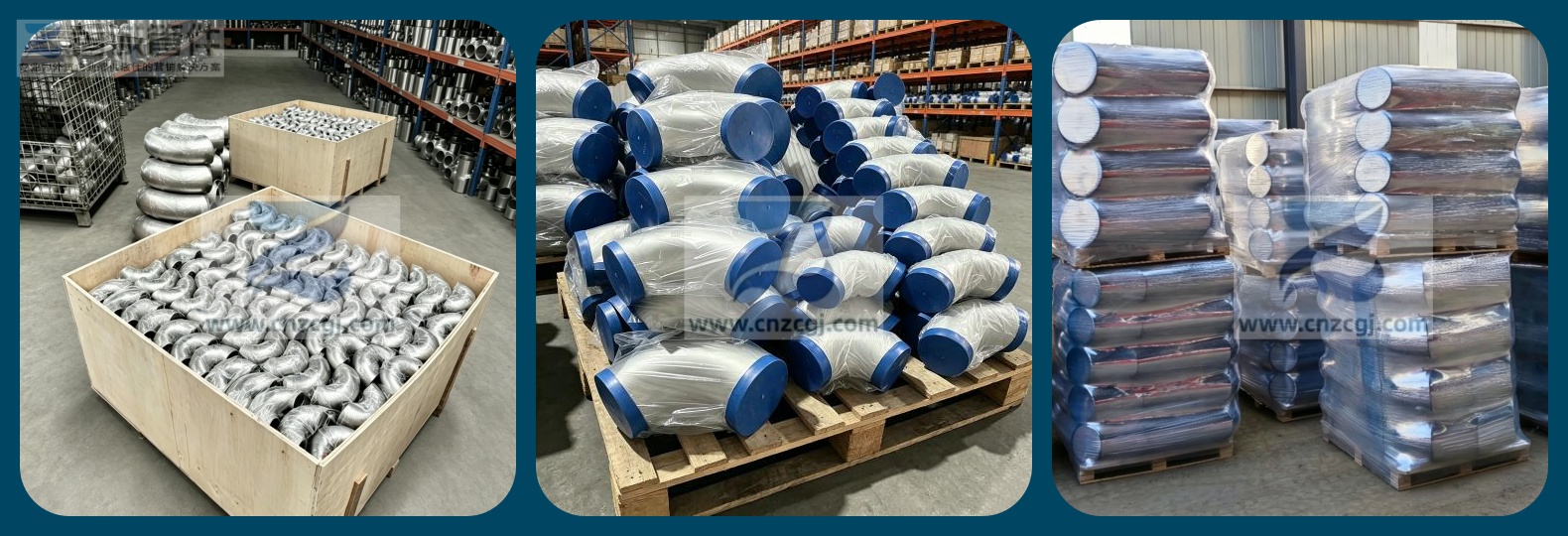
As a professional pipe fittings manufacturer, we offer:
100% material traceability: each batch comes with a mill test certificate, and third-party inspection is welcome.
Full size coverage: from 1/2 "to 48", with complete wall thickness options and custom non-standard sizes available.
Strict compliance with ASME B16.9: dimensional tolerances meet the standard for trouble-free installation.
Multiple surface finishes: pickling, mechanical polishing, mirror polishing – suitable for various cleanliness levels.
Fast delivery: ample stock of common sizes ensures on-time shipment.
ASME B16.9 stainless steel elbows are core components for changing direction in industrial piping. Their standardized design, wide material selection, and broad adaptability make them a reliable choice for demanding applications. Whether you need corrosion resistance, high-temperature performance, or sterile conditions, selecting the right standard and material ensures long-term stability for your piping system.
