


Views: 22 Author: Site Editor Publish Time: 2026-06-22 Origin: Site


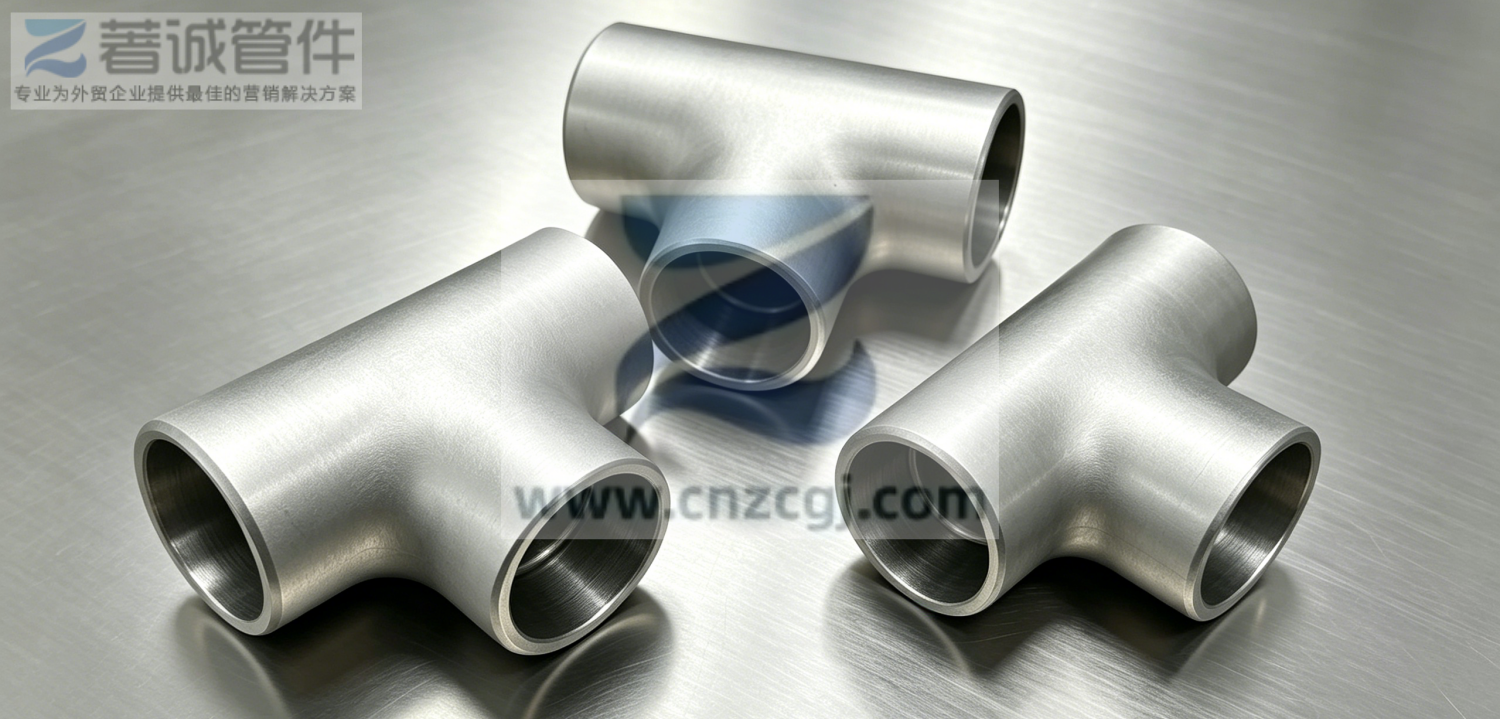
The ASME B16.9 stainless steel tee is an essential pressure piping component in industrial pipeline systems, primarily used for branching or merging fluid flow. With a T-shaped structure, it consists of three openings: two collinear main-run ports and one perpendicular branch port. Connected to pipes via butt welding, it enables the directional conveyance and control of media.
Stainless steel tees are mainly classified by geometry and connection method:
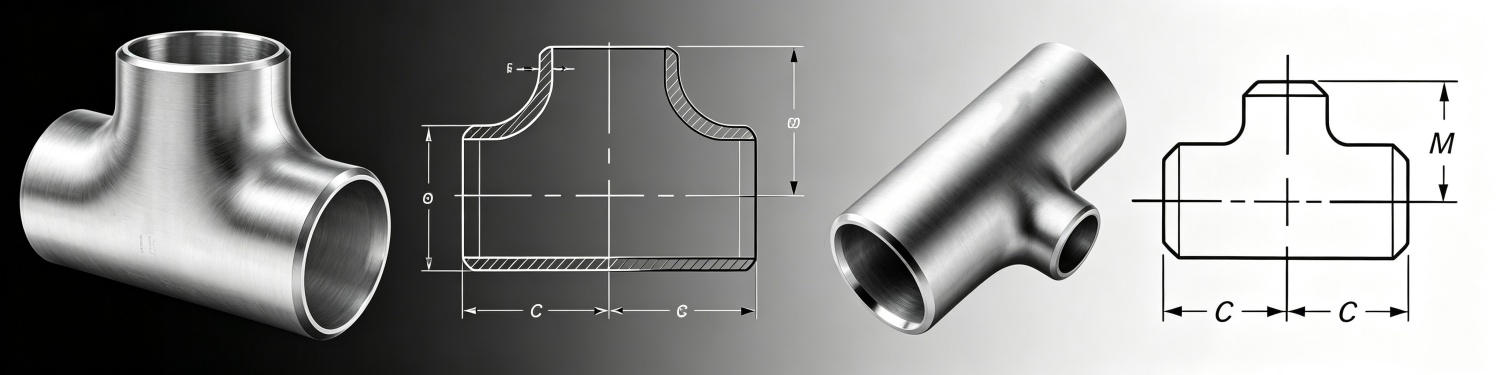
Based on whether the branch diameter matches the main run diameter, tees are divided into straight (equal) tees and reducing (unequal) tees.
Straight tees have three openings of the same diameter and are used to connect pipes of identical sizes.
Reducing tees have a branch opening smaller than the main run opening and are used for connecting pipes of different diameters.
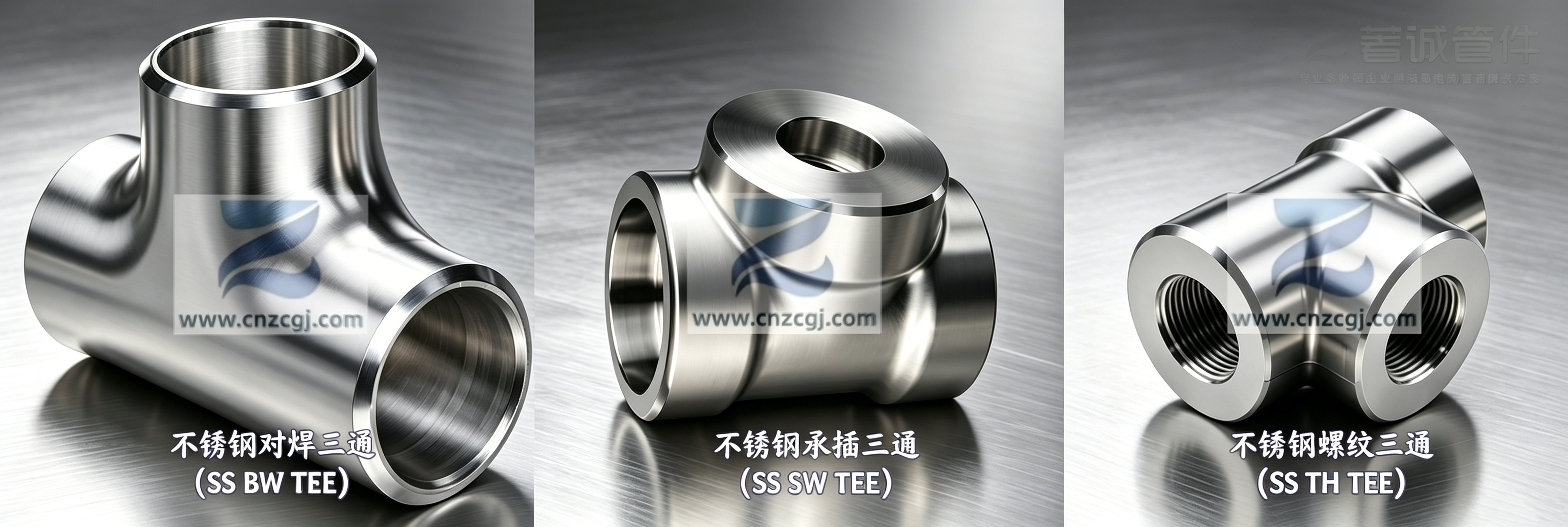
From a connection standpoint, stainless steel butt-weld tees (SS Butt Weld Tee) are joined to pipes by direct butt welding, offering strong joint integrity and excellent sealing. They are suitable for high-pressure, high-temperature, and large-diameter piping systems. Butt-weld connections are widely used in industrial piping due to their reliability and broad size coverage. The corresponding American standard for butt-weld tees is ASME B16.9.
In addition, threaded and socket-weld tees are available. These are typically used for small-bore piping from 1/8" to 4", and their manufacturing standard is ASME B16.11.
Common materials for stainless steel butt-weld fittings include austenitic stainless steels such as 304/304L and 316/316L, as well as duplex stainless steels. In the American standard system, two primary material specifications apply:
Typical grades include WP304, WP304L, WP316, and WP316L. Among these, WP316L contains molybdenum, which enhances its resistance to pitting and intergranular corrosion compared to the 304 series, making it suitable for chloride-containing or acidic/caustic environments.
Chemical composition
CHEMICAL | LIMITS | C | Mn | P | S | Si | Ni | Cr | Mo |
ASTM A403 WP304 | MIN | 8.0 | 18.0 | ||||||
MAX | 0.08 | 2.00 | 0.045 | 0.030 | 1.00 | 11.0 | 20.0 | ||
ASTM A403 WP304L | MIN | 8.0 | 18.0 | ||||||
MAX | 0.03 | 2.00 | 0.045 | 0.030 | 1.00 | 11.0 | 20.0 | ||
ASTM A403 WP316 | MIN | 10.00 | 16.00 | 2.00 | |||||
MAX | 0.08 | 2.00 | 0.045 | 0.030 | 1.00 | 14.00 | 18.00 | 3.00 | |
ASTM A403 WP316L | MIN | 10.00 | 16.00 | 2.00 | |||||
MAX | 0.03 | 2.00 | 0.045 | 0.030 | 1.00 | 14.00 | 18.00 | 3.00 |
Mechanical properties
MATERIAL | ASTM A403 WP304 | ASTM A403 WP304L |
T.S (MPA) | 515 min | 485 min |
Y.S (MPA) | 205 min | 170 min |
EL % | 28 min | 28 min |
MATERIAL | ASTM A403 WP316 | ASTM A403 WP316L |
T.S (MPA) | 515 min | 485 min |
Y.S (MPA) | 205 min | 170 min |
EL % | 28 min | 28 min |
Duplex stainless steels feature a dual-phase microstructure of approximately equal parts austenite and ferrite, offering about twice the strength of 316L. For example, ASTM A815 S32205 (2205 duplex) has a minimum yield strength of 450 MPa, significantly higher than 316L's 170 MPa, while also providing excellent resistance to stress corrosion cracking. For more severe service conditions, ASTM A815 includes S32750 (2507 super duplex), with a minimum yield strength of 550 MPa and a pitting resistance equivalent number (PREN) exceeding 40.
Chemical composition
| CHEMICAL | C | Mn | P | S | Si | Ni | Cr | Mo | N | Cu | W |
| ASTM A815 WPS31803 | 0.03 max | 2.0 max | 0.030 max | 0.020 max | 1.0 max | 4.5-6.5 | 21.0-23.0 | 2.5-3.5 | 0.08-0.20 | ||
| ASTM A815 WPS32750 | 0.03 max | 1.2 max | 0.035 max | 0.020 max | 0.8 max | 6.0-8.0 | 24.0-26.0 | 3.0-5.0 | 0.24-0.32 | 0.5 max | |
| ASTM A815 WPS32760 | 0.03 max | 1.0 max | 0.030 max | 0.010 max | 1.0 max | 6.0-8.0 | 24.0-26.0 | 3.0-4.0 | 0.20-0.30 | 0.5-1.0 | 0.5-1.0 |
| ASTM A815 WPS32205 | 0.03 max | 2.0 max | 0.030 max | 0.020 max | 1.0 max | 4.5-6.5 | 22.0-23.0 | 3.0-3.5 | 0.14-0.20 |
Mechanical properties
| MATERIAL | T.S (MPA) | Y.S (MPA) | EL % | HARDNESS |
| ASTM A815 WPS31803 | 620 min | 450 min | 20 min | 290 max |
| ASTM A815 WPS32750 | 800 min | 550 min | 15 min | 310 max |
| ASTM A815 WPS32760 | 750 min | 550 min | 25 min | 270 max |
| ASTM A815 WPS32205 | 760 min | 550 min | 15 min | 300 max |
ASME B16.9 is an authoritative standard established by the American Society of Mechanical Engineers for wrought butt-welding fittings. It provides uniform technical requirements for design, manufacturing, dimensional tolerances, and inspection, and is widely recognized globally. The standard applies to butt-weld fittings in sizes NPS 1/2" through 48" (DN15 to DN1200), covering tees, elbows, reducers, caps, and other products. It specifies critical dimensions such as outside diameter at ends, wall thickness, and center-to-end dimensions, ensuring interchangeability and reliable installation across different manufacturers.
ASME B16.9 standard covers multiple key elements in the manufacturing of butt weld fittings. In terms of dimensional tolerances, the allowable deviations for the outer diameter, inner diameter, wall thickness, length, angle, and other dimensions of welded pipe fittings are clearly defined to ensure that the fittings can be accurately matched with other components in the pipeline system, ensuring the sealing and stability of the connection.
| Shape Type | Equal Tee and Reducing Tee |
| Size Range | 1/2" - 48" / DN15 - DN1200 |
| Thickness Schedule | SCH 10 - SCH 160, XXS |
| Standard | ANSI / ASME B16.9, MSS SP 43, JIS B2311/2312/2313, DIN2605/2615/2616/2617, EN10253 |
| Carbon Steel | ASTM A234 WPB/WPC, A420 WPL6 |
| API 5L Grades | ASTM A860 WPHY 42 / 46 / 56 / 60 / 65 |
| Alloy Steel | ASTM A234 WP11 / WP12 / WP 5 / WP9 / WP91 / WP92,15CrMoG, 12Cr1MoVG, 12Cr5Mo, 1Cr5Mo, Cr9Mo, 10CrMo910, 12CrMo4-5 |
| Stainless Steel | ASTM A403 WP304/304L/304H, 316/316L, 310S, 317,347, 904L, A815 S32205, S31803, 32750, 32760 |
Key dimensional parameters for ASME B16.9 butt-weld tees include Nominal Pipe Size (NPS), wall thickness schedule (Schedule), and outside diameter at the ends. The standard covers sizes from ½ inch to 48 inches and wall thickness schedules from Sch 5S to Sch 160 and beyond. For reducing tees, both main run and branch sizes must be specified – for example, "4 × 3" indicates a 4-inch main run and a 3-inch branch. The outside diameter at the butt-weld ends must match that of the connecting pipe to ensure proper weld quality.

| Nominal Size | Outside Diameter at Bevel | Center to End | ||
| DN | NPS | OD1×OD2 | C | M |
| 15 | 1/2 | 21.3 | 25 | 25 |
| 20 | 3/4 | 26.7 | 29 | 29 |
| 25 | 1 | 33.4 | 38 | 38 |
| 32 | 11/4 | 42.2 | 48 | 48 |
| 40 | 11/2 | 48.3 | 57 | 57 |
| 50 | 2 | 60.3 | 64 | 64 |
| 65 | 21/2 | 73.0 | 76 | 76 |
| 80 | 3 | 88.9 | 86 | 86 |
| 90 | 31/2 | 101.6 | 95 | 95 |
| 100 | 4 | 114.3 | 105 | 105 |
| 125 | 5 | 141.3 | 124 | 124 |
| 150 | 6 | 168.3 | 143 | 143 |
| 200 | 8 | 219.1 | 178 | 178 |
| 250 | 10 | 273.0 | 216 | 216 |
| 300 | 12 | 323.8 | 254 | 254 |
| 350 | 14 | 355.6 | 279 | 279 |
| 400 | 16 | 406.4 | 305 | 305 |
| 450 | 18 | 457.0 | 343 | 343 |
| 500 | 20 | 508.0 | 381 | 381 |
| 550 | 22 | 559.0 | 419 | 419 |
| 600 | 24 | 610.0 | 432 | 432 |
| 650 | 26 | 660.0 | 495 | 495 |
| 700 | 28 | 711.0 | 521 | 521 |
| 750 | 30 | 762.0 | 559 | 559 |
| 800 | 32 | 813.0 | 597 | 597 |
| 850 | 34 | 864.0 | 635 | 635 |
| 900 | 36 | 914.0 | 673 | 673 |
| 950 | 38 | 965.0 | 711 | 711 |
| 1000 | 40 | 1016.0 | 749 | 749 |
| 1050 | 42 | 1067.0 | 762 | 711 |
| 1100 | 44 | 1118.0 | 813 | 762 |
| 1150 | 46 | 1168.0 | 851 | 800 |
| 1200 | 48 | 1219.0 | 889 | 838 |
Nominal Size | All Fittings | 45°&90° Elbows & Tees, Crosses | 3D Radius Elbows | Returns | Caps | Reducers & Lap Joint Stub Ends | Lap Joint Stub Ends | ||||||
| DN | NPS | OD 3) 4) | ID 3) | A B C M | A B | O | K | U | E, E1 | H F | G | R | t |
| 15-65 | 1/2 -21/2 | +1.6 -0.8 | ± 0.8 | ± 2 | ± 3 | ± 6 | ± 6 | ± 1 | ± 3 | ± 2 | 0 -1 | 0 -1 | +1.6 0 |
| 80-90 | 3-31/2 | ± 1.6 | ± 1.6 | ± 2 | ± 3 | ± 6 | ± 6 | ± 1 | ± 3 | ± 2 | 0 -1 | 0 -1 | +1.6 0 |
| 100 | 4 | ± 1.6 | ± 1.6 | ± 2 | ± 3 | ± 6 | ± 6 | ± 1 | ± 3 | ± 2 | 0 -1 | 0 -2 | +1.6 0 |
| 125-200 | 5-8 | +2.4 -1.6 | ± 1.6 | ± 2 | ± 3 | ± 6 | ± 6 | ± 1 | ± 6 | ± 2 | 0 -1 | 0 -2 | +1.6 0 |
| 250-450 | 10-18 | +4.0 -3.2 | ± 3.2 | ± 2 | ± 3 | ± 10 | ± 6 | ± 2 | ± 6 | ± 2 | 0 -2 | 0 -2 | +3.2 0 |
| 500-600 | 20-24 | +6.4 -4.8 | ± 4.8 | ± 2 | ± 3 | ± 10 | ± 6 | ± 2 | ± 6 | ± 2 | 0 -2 | 0 -2 | +3.2 0 |
| 650-750 | 26-30 | +6.4 -4.8 | ± 4.8 | ± 3 | ± 6 | --- | --- | --- | ± 10 | ± 5 | --- | --- | --- |
| 800-1200 | 32-48 | +6.4 -4.8 | ± 4.8 | ± 5 | ± 6 | --- | --- | --- | ± 10 | ± 5 | --- | --- | --- |
| 1300-1500 | 52-60 | +6.4 -4.8 | ± 4.8 | ± 5 | --- | --- | --- | --- | --- | --- | --- | --- | --- |
| 1600-1700 | 64-68 | +6.4 -4.8 | ± 4.8 | ± 5 | --- | --- | --- | --- | --- | --- | --- | --- | --- |
| 1800-2000 | 72-80 | +6.4 -4.8 | ± 4.8 | ± 5 | --- | --- | --- | --- | --- | --- | --- | --- | --- |
ASME B16.9 standard also specifies requirements for the surface quality and pressure testing of stainless steel pipe fittings. In terms of surface quality, the inner and outer surfaces of the pipe fittings should be smooth and free from defects such as cracks, folds, scratches, etc; Pressure testing requires pipe fittings to undergo hydrostatic or pneumatic testing at a specified pressure to verify their sealing and pressure resistance performance, ensuring that there will be no leakage or other issues during use.
Stainless steel butt-weld tees play a critical role in various industrial sectors:
Petrochemical Industry: Used for transporting crude oil, refined products, and various chemical media, with stainless steel providing corrosion resistance and high-temperature performance.
Marine Engineering: Offshore platforms and subsea pipeline systems extensively use duplex stainless steel tees to withstand seawater corrosion and high-pressure conditions.
Power Generation and Metallurgy: Employed in boiler piping, steam systems, and other high-temperature, high-pressure environments.
Pharmaceutical and Food Processing: Austenitic stainless steel tees meet hygienic requirements and are used for transporting pharmaceutical or food-grade fluids.
When selecting a stainless steel butt-weld tee, the following key factors should be considered:
Media and Corrosivity: Choose material based on the corrosiveness of the fluid. For general corrosive conditions, ASTM A403 WP304/316L may suffice. For chloride-containing or highly corrosive media, duplex stainless steels such as ASTM A815 S32205 or higher grades are recommended.
Temperature and Pressure: Determine the appropriate wall thickness schedule based on design temperature and pressure to meet strength requirements.
Pipe Size Matching: Decide between a straight or reducing tee. For reducing tees, accurately specify both the main run and branch pipe diameters.
Standard Compliance: Prioritize fittings that comply with ASME B16.9 to ensure dimensional accuracy and quality assurance based on established standards.
