


Views: 1 Author: Site Editor Publish Time: 2026-02-03 Origin: Site


Reliable sealing technology is crucial for ensuring the safe and stable operation of pipeline systems and equipment in industries such as petrochemicals, electricity, and aerospace. As a high-performance sealing component, spiral wound gaskets play an irreplaceable role in multiple industrial fields due to their excellent adaptability, high temperature and high pressure resistance, and excellent resilience. This article will comprehensively analyze the structure, advantages, and applications of spiral wound gaskets, helping you gain a deeper understanding of this important industrial component.
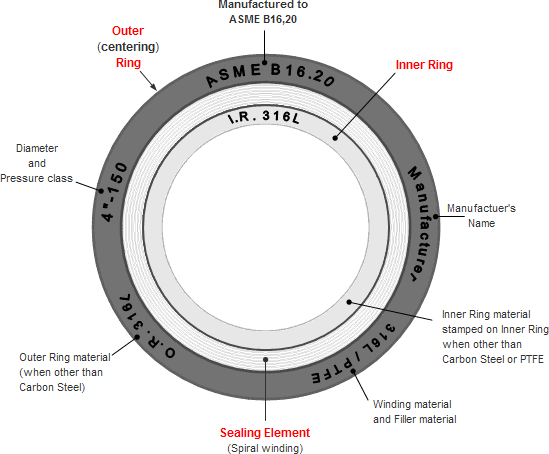
Spiral wound gasket is a composite sealing gasket made by intertwining metal tape and non-metallic filling material. It combines the strength of metal with the sealing properties of filling materials, forming an elastic spiral structure through a special winding process, which can effectively achieve reliable static sealing.
The core structure of a spiral wound gasket typically consists of four parts:
Metal skeleton: usually made of high-quality stainless steel (such as 304 winding pad, 316 winding pad), special alloys (such as titanium alloy winding pad, Hastelloy alloy winding pad) or carbon steel strip, precision processed and formed to provide structural support and mechanical strength.
Filling material: As a sealing layer, embedded between metal strips, commonly used graphite, polytetrafluoroethylene (PTFE), ceramic fibers, etc., responsible for achieving the main sealing function.
Inner ring: located inside the gasket, it can prevent the filling material from being washed away by the medium and guide the flow of the medium, enhancing stability.
Outer ring: located on the outside of the gasket, providing positioning and reinforcement to prevent excessive compression and detachment of the gasket.
This "combination of rigidity and flexibility" composite structure endows the gasket with excellent compression rebound performance and sealing reliability.
The choice of filling material directly affects the temperature resistance, corrosion resistance, and sealing performance of the gasket:
Flexible graphite: The most widely used, with a wide temperature range (-200 ℃ to+500 ℃ or above, and up to 1600 ℃ in non oxidizing environments), good chemical stability, and excellent sealing performance.
Polytetrafluoroethylene (PTFE): resistant to strong corrosive media, suitable for temperatures ranging from -200 ℃ to+260 ℃, but has poor creep resistance.
Ceramic fiber/mica: suitable for extremely high temperatures (up to 1000 ℃) and high-pressure environments, but with relatively low flexibility.
Choosing the appropriate filling material based on the specific medium, temperature, and pressure conditions is the key to ensuring successful sealing.
Excellent sealing performance: Multi layer sealing design can effectively prevent gas or liquid leakage.
High temperature and pressure resistance: It can adapt to extreme working conditions ranging from low temperature cryogenic to high temperature (up to 1000 ℃ or above), and from vacuum to high pressure (usually up to 25MPa or above).
Good compression resilience: can compensate for flange displacement caused by temperature and pressure fluctuations, and maintain long-term sealing.
Corrosion and creep resistance: Through material combination, it can withstand various corrosive media and has good anti relaxation performance.
Balance of economy and reliability: Compared with pure metal gaskets, it has lower cost and higher reliability than non-metallic gaskets, with outstanding cost-effectiveness.
Metal wrapped gaskets are widely used in:
Petrochemical industry: refining equipment, reactors, heat exchangers, pipeline flanges, etc.
Electric power industry: steam turbines, boilers, nuclear power systems.
Aerospace: engines and fuel systems.
Shipbuilding: Power systems and piping.
Pharmaceutical and Food: High standard hygiene grade system (requiring special material certification).
Working principle: The mystery of elastic sealing
Its sealing principle is based on the "elastic compression rebound" mechanism. During installation, the gasket is compressed by pre tightening the bolts, and the filling material flows to fill the micro defects on the flange surface, forming an initial seal. When the medium is introduced into the system or the temperature and pressure increase, the internal pressure causes the flange to have a tendency to separate. At this time, the metal skeleton of the gasket provides support, while the filling material continues to maintain close contact with residual elastic force, thereby achieving effective sealing under dynamic working conditions.
Choosing the appropriate gasket requires comprehensive consideration of the following factors:
Operating conditions: Clearly define the chemical properties, temperature range, and pressure rating of the medium (especially for cyclic operating conditions).
Flange standards and dimensions: Confirm flange type (such as RF, FF, RJ, etc.), nominal diameter, pressure rating, and surface roughness.
Material compatibility: Ensure that metal strips, filling materials, and media do not corrode or chemically degrade.
Standards and certification requirements: Select products of the corresponding grade according to industry standards such as API, ASME, TA Luft, etc.
Economic evaluation: Optimize costs while meeting lifespan and safety requirements.
Preparation: Clean the flange sealing surface to ensure there are no scratches, rust, or residual old gaskets.
Inspection: Check the gasket model and material to confirm that there is no damage.
Positioning: Accurately align the gasket with the flange hole to avoid forced insertion.
Pre tightening: Tighten the bolts gradually in diagonal order to achieve 30% -50% of the specified pre tightening force.
Final tightening: Tighten again in multiple diagonal steps (at least 3 steps) to the design torque value to ensure even stress distribution.
Hot tightening when necessary: For high-temperature conditions, the system may need to be shut down for re inspection or re tightened in a hot state after heating up.
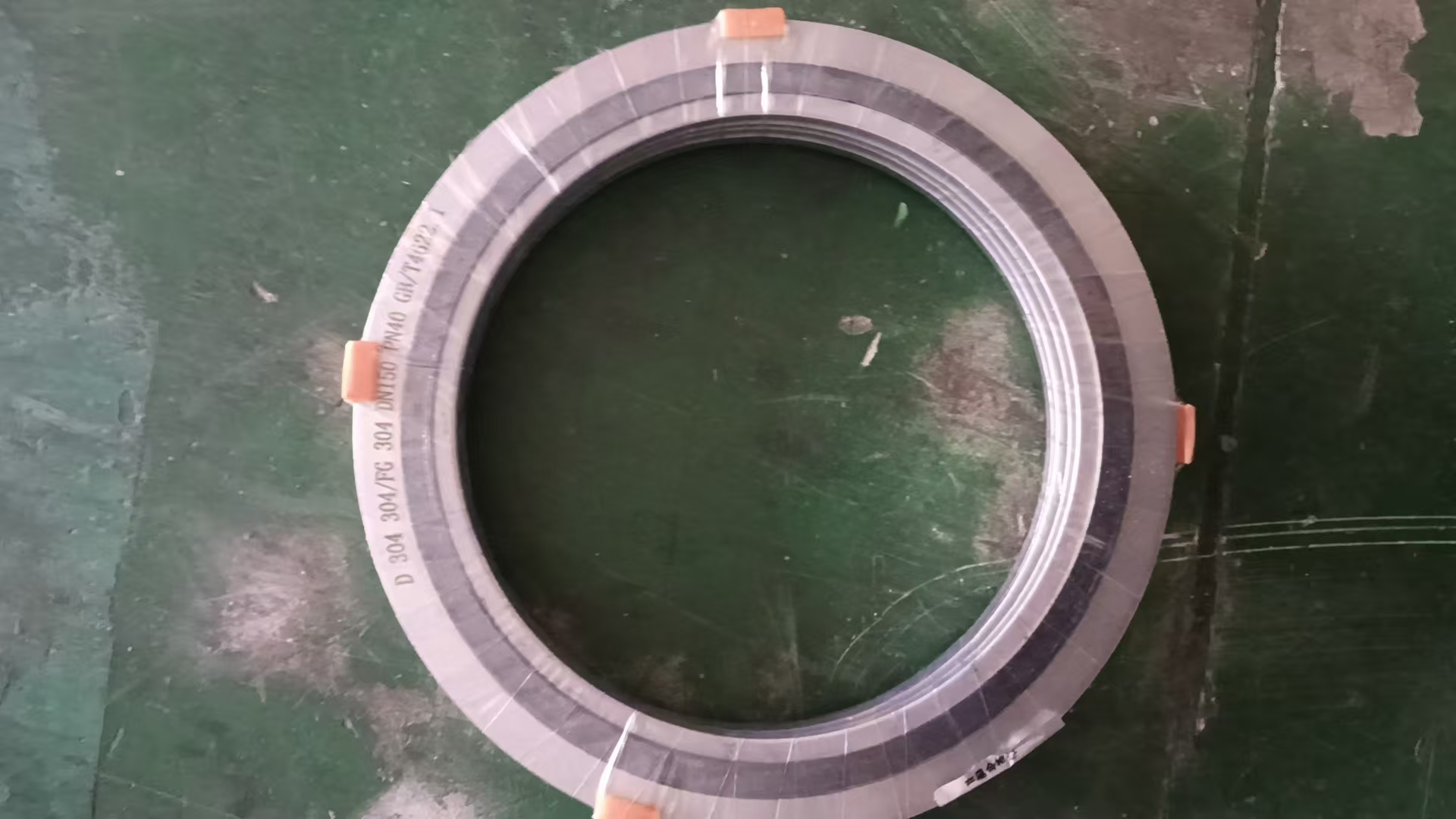
International/American standards: ASME B16.20, API 601, MSS SP-44
European standards: EN 1092, DIN 2697
German authoritative certification: TA Luft (for low emission sealing)
Commonly used in the petrochemical industry: HG/T 20610 (PN series), HG/T 20631 (Class series) Nuclear power plant application: RCC-M (France)
Choosing gaskets that meet applicable standards is the foundation for ensuring system compliance and safety.
Metal wrapped gaskets have become an indispensable sealing component in modern industry due to their scientific structural design, flexible material combination, and excellent sealing performance. Correctly selecting, installing, and maintaining metal wound gaskets can not only effectively prevent leaks and ensure safety, but also reduce maintenance costs and improve system operating efficiency.
